Skip to content

Gender & Agency / A design audit by Riya Kamat

Recipes as Currency and Who Can Cash In

Earning an income is one kind of progress. Having a say in what happens to it is another.

With Avinash MudaliarCo-Founder & CEO, Hindustan Times Labs
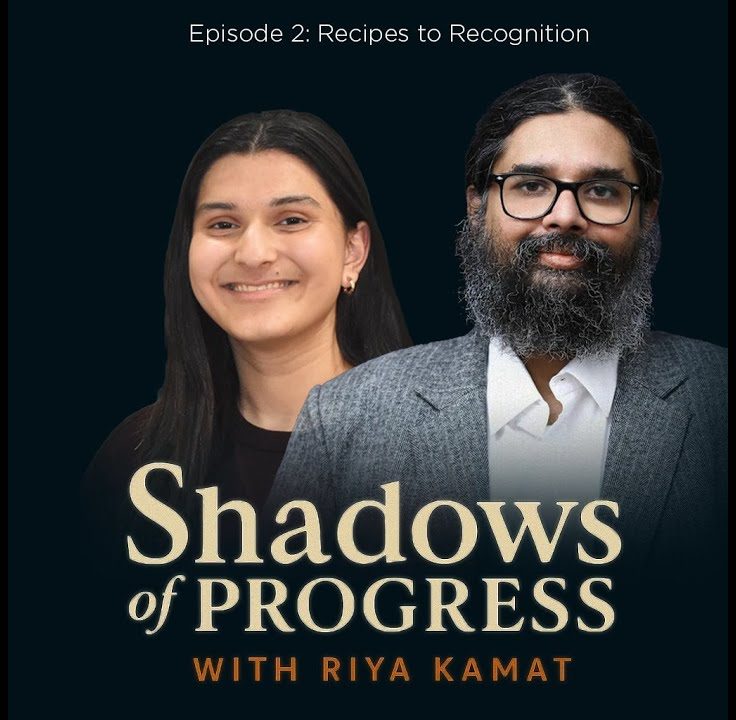
Avinash Mudaliar — Shadows of Progress, episode 2

The conversation, at a glance

A system. A blind spot. A different starting point.

01

The system

Slurrp connects homemakers’ cooking knowledge to audiences, recognition, and brand income.

02

Who it overlooks

Women whose household circumstances limit public visibility or control over their earnings.

03

Riya’s proposed direction

Build in privacy controls, contextual financial literacy, and peer support around household circumstances.

If it's only the balance sheet, its purpose lacks conviction, and it withers over time.

Avinash Mudaliar, in conversation

The design audit / By Riya Kamat

Looking beneath the surface.

7 minute read · Complete source text

Download auditDOCX · 24 KB
Jump to an audit section

Recipes as Currency and Who Can Cash In

Shadows of Progress: Episode 2

Guest: Avinash Mudaliar, co-founder and CEO of HTLabs (Slurrp)

01

The System

The first thing I noticed at Slurrp was how clean the data looked. The earnings dashboards, the creator engagement metrics, the regional breakdowns, all of it landing in tidy rows. What did not land in any row was what happened to the money after a creator received it. Some women’s earnings show up in family budgets. Others are redirected: into savings the woman does not declare, into a sister-in-law’s expenses, into nothing visible at all. The platform recorded the income. What happened to the income once it crossed the threshold of the house was outside the platform’s view, and outside what its dashboards were designed to see.

The system is Slurrp, and behind it HTLabs, with a stated reach Avinash Mudaliar describes as roughly 750,000 micro-entrepreneurs and 7.4 million unique visitors. The platform is built on a real and durable insight: homemakers across India have cooking knowledge that conventional career systems never priced and never made room to recognize. Slurrp prices it. The platform earns its strongest claims honestly. Avinash himself describes it as “technology with a heart.” The question though is what that heart was designed to reach, and what it was not.

02

The Intended User

The default user Slurrp imagines is a homemaker with several conditions present simultaneously: discretionary time during the day, sufficient digital literacy to use a smartphone and create content, access to a device that is hers to use, and household permission to be publicly visible as a creator. None of these conditions is unreasonable on its own. Stacked together, they describe a much smaller number of women than the platform’s scale implies.

The recognition channels the platform uses to celebrate its creators, including print, radio, and social media, assume a creator who can afford the public exposure they generate. A homemaker whose household would object to her name appearing in the Hindustan Times cannot benefit from Slurrp’s most distinctive feature, because that feature was built for women whose households would accept that kind of visibility. The platform’s most public form of empowerment is also its narrowest gate, appearing before the platform’s metrics even begin to count.

03

Hidden Exclusions

The platform’s success metrics are honest as far as they go. What they go past is where the exclusions live. The first kind belongs to women who are on Slurrp and counted; the second to women who are not on Slurrp and not counted.

The first is the woman who is on the platform, earning, but cannot let the earning register at home. I named this during the interview: some creators underplay their success to keep peace in the household. Avinash confirmed it. The earning is technically happening; the autonomy the earning was meant to enable is not. The platform counts her as a success. The household has effectively neutralized what success was supposed to mean. She has been issued income without ownership.

The second is the woman who never joined the platform because she could not afford to be publicly named. Slurrp’s growth engine runs on visibility: features, callouts, the Great Indian Cooking Challenge. A creator who needs to remain invisible for safety, for family, or for her own reasons has been designed out of the platform’s distribution model. She does not appear in the 750,000 figure because she never registered.

Avinash referenced Orwell’s quote “all animals are equal, but some are more equal than others” to describe Indian household dynamics. The platform produces the formal equality of being on Slurrp. What it cannot reach is the substantive inequality inside the front door. He named the gap. The platform’s response to the gap is to outsource its resolution to the creators themselves: the community, he says, helps initiate discussions in families. Peer community pressure is real, but it is informal and uneven. It depends on which creators a woman happens to find.

04

Embedded Values

Organizing the platform around visibility reveals what Slurrp actually optimizes for: the legibility of women’s economic activity to public audiences. Recognition becomes the platform’s strongest signal of impact.

Recognition matters. Avinash is not wrong about that. But recognition and autonomy are different things, and the platform treats the first as a reliable proxy for the second when it is not. A woman who is featured in HT print but cannot keep her earnings has visibility without power. A woman who builds savings in her own name without being featured has power without visibility. The platform’s metrics, such as number of creators, scale of features, and breadth of recognition, measure the first but not the second.

What’s remains unaccounted for is the conversion between them. The platform tracks how many women it celebrates. It does not track how many of those women maintain decision-making authority over what they have earned. The metric does not have a column for that, which means the platform cannot tell when the conversion fails, and cannot design to fix it.

05

Ethical Redesign

The redesigns below are not corrections to a broken platform. Slurrp works. The problem is that working by Slurrp's own metrics has not been the same thing as serving the women the platform claims to serve.

The first redesign involves earning privacy and disclosure controls. Creators should have granular control over what about their participation is public and what is not: income, feature status, workshop attendance, dashboard. A settings page with explicit toggles, defaulted to private, suffices. A counterargument would be that this hides success stories and weakens the role-modeling effect Slurrp depends on, but the role-modeling is the platform’s tool, not the creator’s responsibility. Empowerment includes the right to strategic silence. A woman who earns quietly should not lose access because the marketing engine runs on broadcasting her name.

The next change concerns legal and financial literacy built into the platform itself, not designed as an external resource. Thirty-second cards in the dashboard, in regional languages, explaining how to open an individual savings account, what an income tax slab means, what a creator agreement is. These should appear in context: a card appears when a creator hits her first payout, another when she signs a brand deal. Some will say that women already know what to do with the money they earn. Knowing what to do and knowing your specific options are different things, particularly for women whose male relatives have always handled the accounts. Sending a creator off-platform for that knowledge means the platform never owned the relationship.

Finally, community circles should be organized by household context, not only by food category. Slurrp groups creators by cuisine. Add a second axis: single earner, secondary income, joint family, conservative household. Include opt-in tagging at signup and peer groups segmented by relevance. The reasonable concern here is fragmentation. But the community already fragments, invisibly, in the WhatsApp groups creators build for themselves. The platform’s choice is between making the fragmentation legible and useful, or leaving each woman to find her own people by chance.

06

Reflection

At Slurrp I expected to study a platform that gave women economic power. What I ended up studying was a platform that gave women economic power without redesigning the one place where that power had to land. The income was real. The recognition was real. The autonomy that the income was supposed to enable was not always real, because the household the woman lived in had never been part of the platform's design.

One creator I sat across from during my internship had been featured in HT three times. She had earned enough to triple her household’s discretionary income. She told us she was thinking about whether to keep accepting brand deals because the photographs were becoming hard to explain at home. I remember thinking the platform had no place to put that conversation, even if it knew the conversation was happening.

Amartya Sen’s work on what he calls cooperative conflicts inside households turns on a question Slurrp does not ask: whose contribution to the household gets counted as a contribution, and by whom? A woman who earns is not the same as a woman whose earning is recognized inside the family that benefits from it. Slurrp ensures the first. The second was never on the platform to begin with.

The system, made visible

Follow the connections.

Select an element to see how it connects to the rest of the system, and who falls outside its assumptions.

The platform’s success meets the household.

Slurrp records income and recognition. The household determines what happens to them next.

01 / Inputs

02 / Slurrp

03 / Visible outcomes

04 / The household boundary

Outside the frame

Explore the system

Where would you begin?

Select any element to highlight its connections and jump to the part of the audit it comes from.

Interpretive map by Riya Kamat. Connections describe the source analysis; they are not a quantitative model.
Download mapPDF · 119 KB
Read the complete map as text

Inputs

Outputs Recipe content Homemaker knowledge HT network Print, radio, social Community events Workshops, Cooking Challenge Slurrp Platform (HTLabs) Connects homemakers to brands and audiences Income Per recipe, per deal Recognition Features, callouts Brand deals Sponsorships, ambassadorships What the household does to the outputs The system Slurrp’s design does no account for Income may be redirected, withheld, or quietly absorbed.

Recognition may be welcomed, argued, or kept hidden.

The platform records the output. It cannot see what the household does next.

Excluded by household, not by platform The platform's distribution model requires public visibility. Some women cannot accept that cost. Others accept it and then pay for it at home.

Women without household permission • Cannot be publicly named • Never join the platform • Not in the 750k figure Women self-censoring earnings • On platform, earning • Underplay to keep peace • Income without ownership

E P I S O D E 2

Recipes as Currency and Who Can Cash In

From inquiry to possibility

Take the thinking further.

Workshops, proposals, and practical resources developed alongside this conversation. Read them here or download the original files.

Companion resource / DOCX

Agency and Home Friction Workshop

Download originalDOCX · 26 KB
Read the full resource

Agency and Home Friction Workshop

This workshop is designed for women earning income on Slurrp who are experiencing, or expect to experience, friction at home about their income. It is not a financial literacy class, confidence-building exercise, or a therapy session. It is ninety minutes of structured, peer-led work on a specific question: what does it take to keep what you have earned?

The workshop assumes the platform has done its part: the creator is on Slurrp, generating income, building a following. What the platform cannot do is reach the household. This workshop is the layer the platform’s design leaves unaddressed. It treats the household as a system the creator is operating inside and gives her tools to operate inside it more deliberately.

Who this workshop is for

Women who have earned on Slurrp for at least three months and who anticipate, are currently experiencing, or have already experienced household resistance to their digital income. Open to all cuisine categories, all regions, all household dynamics. Conducted in the regional language of the host city. No prior workshop experience required.

Who this workshop is not for

Women in acute domestic crisis. Women whose presence at the workshop would itself create a household problem they cannot manage. Women under eighteen. The workshop does not provide legal counsel, domestic violence support, or mental health services. Where a participant’s situation exceeds what the workshop can support, the facilitator’s job is to refer her to the appropriate local resource, not to handle it in the room. Local referral cards should be available at intake.

Group size and setup

Eight to twelve participants. Smaller than eight and the small-group exercises may not generate enough discussion; larger than twelve and the facilitator cannot track individual participants’ comfort levels.

A private room with a closed door, in a community space participants already know, such as a library, a community center, a school used after hours. Not in the offices of a brand partner. Not in a participant’s home. Neutral ground.

Materials

Paper and pens for each participant. A small printed booklet (eight to twelve pages) containing the workshop’s three reference exercises. Two flipchart sheets per small group. Snacks and water. A printed list of local referral resources: legal aid, domestic violence helpline, women-led financial advisors, individual savings account procedures in the regional language. The referral list is not advertised in the session; it is offered privately to any participant who asks.

Facilitator profile

A woman, fluent in the regional language and English, with experience facilitating groups in mixed-literacy settings. Trained in basic psychological safety practices. Briefed in advance on local context: what regional family dynamics tend to look like, what the legal landscape for women’s banking is in this state. The facilitator does not need to be from Slurrp. In several cases, she should not be.

The ninety minutes

Opening (10 minutes): Naming the room. Participants and facilitator sit in a circle. The facilitator names what the workshop is and what it is not, in the language above. Each participant introduces herself with first name only, the cuisine she cooks, and one word for what she wants from the next ninety minutes. The facilitator writes the words on a flipchart and refers back to them at the end.

Exercise 1: Household map (15 minutes): Solo. Each participant draws a simple map of her own household on the worksheet provided. Circles for each person who lives there or who has financial influence (mother-in-law in another city, brother who manages joint accounts). For each circle, two questions: Does this person know I am earning on Slurrp? Does this person have any say over what I do with that money? No one shares the map. The map is hers to take home or destroy.

Exercise 2: Scenarios in small groups (25 minutes): Groups of three. Each small group receives a printed scenario. The group is not asked to solve the scenario but to identify three things: where the friction is coming from, what options the woman in the scenario actually has, and which option each member of the group would consider in her place. The scenarios are calibrated so that the friction is recognizable but the woman in the scenario is not anyone in the room.

Example scenarios:

  • A creator earning ₹40,000 per month on Slurrp has been depositing into a joint account her husband controls. She wants to open an individual account but has never opened one alone. She does not know what documents she needs, and she does not want her husband to know she is exploring this until she is sure she will do it.
  • A creator’s mother-in-law has begun monitoring how much time she spends on Slurrp, suggesting it takes her away from the family. The income is welcome; the time is not. The creator does not want to give up either.
  • A creator was featured in an HT print piece. Her brother-in-law saw the article and questioned why she was working outside the home. Her husband, who had been quietly supportive, is now defensive in front of his family. She has another feature coming up.

Reconvene (10 minutes): Full group. Each small group shares one observation, not which option they chose, but what they noticed about the situation. The facilitator notes patterns: how often the friction is not about money but about visibility; how often the woman in the scenario already knows what she wants but lacks the tool to act on it.

Exercise 3: Tools (20 minutes): Solo, then pairs. Working from the workshop booklet, each participant reviews a one-page summary of three practical tools: how to open an individual savings account in this state (documents, where, what to ask for), how to negotiate a creator agreement (three questions to ask), and what an income tax slab means for her earning bracket. Participants then pair up and explain one of the three to the other person in their own words. The point is not to memorize. The point is to practice translating the tool into language she could use at home.

Closing (10 minutes): Commitments and resources. Each participant writes one private commitment for the next thirty days. Not shared aloud. The facilitator hands out the referral resource list to every participant, privately, with no requirement to use it. The workshop ends by returning to the words each participant wrote at the start. Anything still missing is named without resolution.

Facilitation notes: the harder moments

If a participant cries. Pause the activity. Offer water. Do not push her to share what triggered it. Offer her the option to step out with another participant or with the facilitator for five minutes. The group continues. Do not make her absence the subject of group conversation.

If a participant says her family does not know she is here. Believe her. Do not encourage disclosure. The workshop’s value is not contingent on the family knowing. Confirm she has a plan for how to get home and how to explain her time if asked. The intake form should screen for this in advance.

If participants begin asking whether they can bring their husbands or mothers-in-law to the next session. This is a sign the workshop is working. Note the request. The platform should design a separate family-facing session, but this workshop is not it, and mixing the two within a single session threatens the safe space that makes either useful.

If a scenario hits too close to home for a participant and she goes quiet. The small-group format is designed to make this manageable, she can listen rather than speak. Do not call on her. Check in with her privately at the break.

If a participant tries to dominate the room. Use the structure. The exercises rotate the floor by design. If she continues, name it gently: “I want to make sure everyone here has the same time to think.”

If a participant asks the facilitator for personal advice. Refer her to the resource list. The facilitator’s role is not advisor. Crossing that line will distort what the next participant feels she can ask.

Success criteria

The workshop has worked if, at the end of ninety minutes, the following are true:

  • Every participant has practiced articulating at least one practical tool (account opening, contract negotiation, tax bracket) in her own language.
  • Every participant has identified, privately to herself, at least one source of household friction she had not previously named explicitly.
  • Every participant has the referral resource list and knows what each line on it does.
  • No participant has been pushed to disclose more than she came willing to disclose.
  • The facilitator can identify, post-session, at least two participants whose situation may warrant private follow-up, not by Slurrp, but by the local referral network.

What the workshop does not need to achieve in ninety minutes: any participant making a specific decision about her household, any participant disclosing earnings to her family, any participant resolving the friction she walked in with. The workshop is one intervention in a longer process. Treating it as the whole process is how interventions like this fail.

What this workshop is intentionally not designed to do

It does not teach women how to confront their families. The premise of the workshop is that the woman knows her family better than any facilitator will. It gives her tools and language; it does not script her conversations.

It does not measure success in disclosures. A workshop that ends with women publicly sharing earnings with family members would be a workshop the platform could photograph but not one that has served the participants. Strategic silence is also a successful outcome.

It does not provide the financial or legal advice it points toward. A facilitator who answers detailed questions about account opening is replacing the local expert that participant needs. The workshop’s job is to make the participant aware that the expert exists and to make finding her easier.

Take-home: a framing for the conversation at home, if she chooses to have it

This is a one-page handout offered at the end of the workshop, optional, in the regional language. It acts as a frame, not a script.

The frame is built around three sentences any creator can adapt:

  • This is a kind of work, not a hobby. Naming the activity changes what it can be questioned for.
  • I am building this carefully, and I will share what I am earning when I am ready to. Establishing pace without inviting interrogation.
  • I would rather we talk about this directly than have it become something we avoid. Opening the door without forcing it through.

The handout includes a short note for the participant: she may use one of these sentences, all three, or none. Her choice. The frame is hers to deploy, not a position the workshop expects her to take.